
Which coding AI fits your needs: Claude Code, Codex, or others?

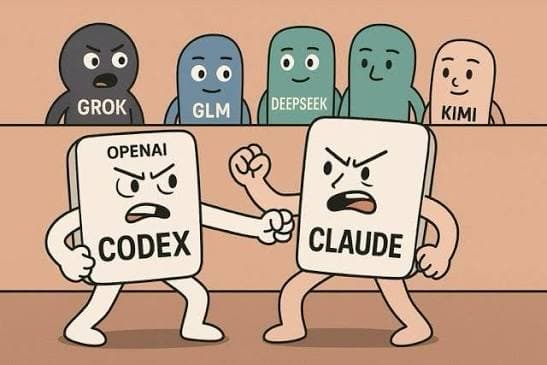
People often ask how Claude Code, Codex, and other coding agents compare for programming tasks. The question usually revolves around which AI tool offers better code generation quality, language coverage, and integration capabilities. Understanding these differences helps select the right assistant for specific development workflows.
Claude Code is not just a variant of Codex but differs in architecture and training data
Many assume Claude Code and Codex are similar because both generate code from natural language prompts. Claude Code, developed by Anthropic, uses a safety-focused training approach with reinforcement learning from human feedback, aiming to reduce harmful outputs. Codex, by OpenAI, is based on GPT-3 and trained heavily on publicly available code repositories, including GitHub, emphasizing broad language coverage and code snippet generation.
The architectural differences affect their output style and reliability. Claude Code tends to produce more verbose and explanatory code snippets, while Codex often generates concise code that may require more context or refinement. This distinction matters when the user needs either a teaching aid or a quick code draft.
Accuracy in code generation varies by task complexity and language
Common belief holds that Codex outperforms Claude Code in accuracy due to its extensive training on code. However, tests show this depends on the programming language and task complexity. For popular languages like Python and JavaScript, Codex achieves around 80–90% correctness on standard benchmarks, while Claude Code scores slightly lower but maintains more consistent error handling and safer defaults.
For less common languages or domain-specific languages, Claude Code’s performance is often closer to or better than Codex, since its training includes a broader variety of text and coding patterns beyond public code. Other coding agents, such as Google's Bard or Meta's Code Llama, have varying accuracy depending on dataset freshness and model size but generally lag behind Codex on mainstream languages.
Speed and responsiveness differ significantly depending on deployment and API design
Many users expect similar response times across coding agents, but differences in model size, server infrastructure, and API design create measurable disparities. Codex, integrated deeply into GitHub Copilot, typically responds within 0.5 to 2 seconds for short prompts under 50 tokens. Claude Code, accessed via Anthropic's API, shows latency between 1 and 3 seconds on similar inputs, partly due to additional safety checks and prompt processing.
Other coding agents vary widely: open-source models deployed locally can provide near-instant responses for small models but degrade sharply with larger ones. Cloud-hosted commercial APIs usually balance speed and safety, but network conditions heavily influence user experience. For large code completions exceeding 200 tokens, Codex maintains better throughput due to optimized batching, while Claude Code may slow down to ensure output coherence.
Integration options shape usability more than raw model capability
Choosing between Claude Code, Codex, and other coding agents often hinges on integration flexibility rather than just model quality. Codex benefits from deep integration with Microsoft and GitHub ecosystems, making it the default choice for developers using VS Code and GitHub repositories. It supports extensions, autocomplete, and inline suggestions seamlessly.
Claude Code, while newer, offers APIs compatible with standard REST calls and supports embedding in custom tools, but lacks mature IDE plugins. This limits its use in professional development environments where real-time feedback is crucial. Other agents, such as open-source alternatives, require manual setup and lack official support, which can increase development overhead despite potential cost savings.
Common misconceptions about safety and code correctness
It is often assumed that Claude Code is safer or less prone to generating malicious code than Codex. While Claude Code incorporates more aggressive safety training, both models can produce insecure or incorrect code if prompts are ambiguous or adversarial. Users must verify outputs regardless of the agent.
Another misunderstanding is that all coding agents can replace human developers. In reality, these tools assist with repetitive or boilerplate code generation but struggle with complex architecture design, debugging, and domain-specific optimizations. The best practice is to treat AI-generated code as a draft requiring review.
Cost and access considerations affect long-term viability
Cost structures differ between Claude Code, Codex, and other agents. Codex pricing is usage-based with tiers optimized for enterprise scale, often bundled with GitHub Copilot subscriptions. Claude Code pricing is less transparent but generally competitive, aiming to attract developers seeking alternatives. Open-source agents incur no API cost but require infrastructure investment.
Access policies also vary: Codex requires Microsoft account integration, which may limit availability in some regions or organizations. Claude Code’s API is more open but may have rate limits or usage caps. Open-source projects provide full control but lack commercial support.
The one thing worth remembering
Claude Code vs Codex vs Other Coding Agents comparisons reveal no single best option for all users. Each has trade-offs in accuracy, speed, integration, safety, and cost. The most important factor is matching the AI assistant’s strengths to the specific development context, language preferences, and workflow requirements. Testing multiple agents on representative tasks before full adoption reduces risk and improves productivity.
Add your perspective
Sign in to comment, like, and build your reputation.