
Stopping AI from Making Things Up

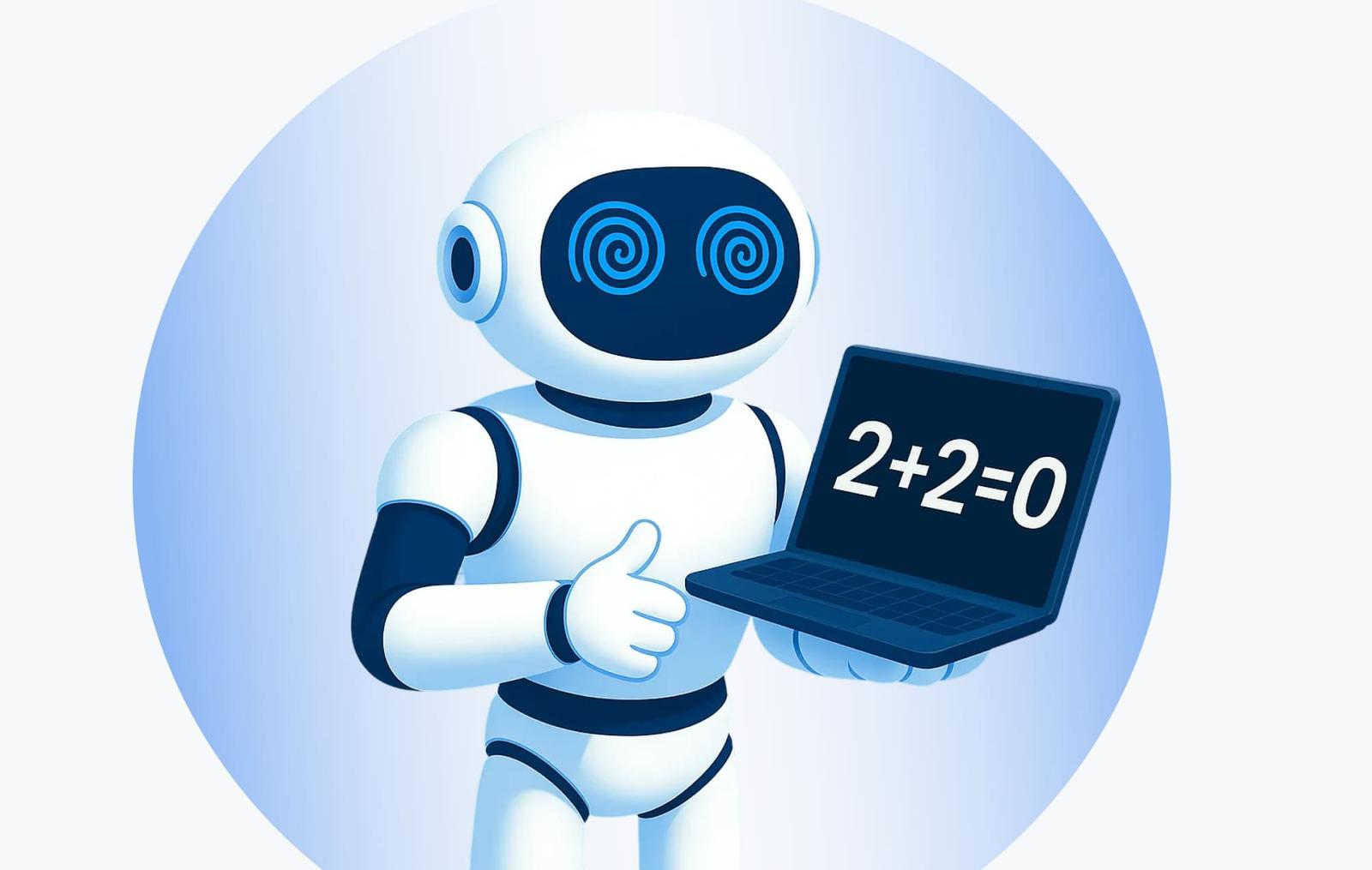
When an AI spits out nonsense, many blame the data or the model size. That’s a surface view. The real problem is subtler. AI hallucinations don’t simply vanish by throwing more data or tweaking parameters. Understanding what they are and why they appear is key to knowing how to reduce AI hallucinations.
More Data Isn’t Always the Fix
The common belief is that flooding AI with additional training data stops hallucinations. It doesn’t. More data can help with coverage but often adds noise, which confuses the model further. Large datasets contain contradictions, errors, or outdated info. Models trained on this imperfect data can confidently generate wrong facts because they pick up patterns in errors as well as truths.
For example, if a chatbot learns from web pages where misinformation is mixed with facts, it will produce hallucinations reflecting that mix. The trade-off ignored here is between data quantity and data quality. Simply increasing quantity without rigorous curation can backfire.
Hallucinations Aren’t Just Random Mistakes
Some imagine AI hallucinations as random or careless errors. They’re not. Models generate plausible but fabricated details because they optimize for fluency and coherence, not truth. They fill gaps with plausible guesses based on training patterns. This is a design trade-off: AI prioritizes sounding right over being right.
Consider a virtual assistant asked for a recent scientific discovery. If the model lacks updated info, it invents a believable answer rather than saying “I don’t know.” This happens because the training objective penalizes incoherence, not factual inaccuracy. Fixing this requires changing training goals, not just model scale.
Prompt Engineering Alone Won’t Solve It
Many swear by prompt tweaks to reduce hallucinations. Clever prompts can reduce errors, but they don’t eliminate hallucinations. The core issue lies deeper—in model architecture and training signals. Tricks like instructing the model to “only answer facts” rely on the model’s learned behavior, which remains imperfect.
This is why even the best prompt can’t guarantee no hallucinations. You trade ease of use for reliability if you rely solely on prompt engineering. Real reduction demands structural solutions, not only input phrasing.
Fact-Checking Layers Are Imperfect Band-Aids
Adding external fact-checking or retrieval layers is popular. While this can catch some hallucinations, it introduces latency, complexity, and new failure modes. The fact-checking system might be outdated or inaccurate itself, or fail to integrate properly with the AI’s output stream.
For instance, a retrieval-augmented model can hallucinate if the retrieval index is incomplete or mismatched. The trade-off here is between accuracy and system complexity. Overengineering fact-checking can create brittle systems that still hallucinate under corner cases.
Fine-Tuning Helps but Isn’t a Panacea
Fine-tuning on curated datasets can reduce hallucinations by teaching the model specific factual behavior. Yet, this is limited by dataset scope and doesn’t fix the model’s fundamental tendency to guess when uncertain. Overfitting to fine-tuning data risks reducing generality and can make the model brittle on queries outside that domain.
So, fine-tuning improves precision in narrow areas but does not eliminate hallucinations universally. The trade-off is between accuracy on specific topics and robustness over a wide range.
One Thing Worth Remembering
Reducing AI hallucinations is not about chasing a silver bullet. It demands a balance of better data curation, adjusted training objectives that value truthfulness, smart use of external knowledge sources, and carefully targeted fine-tuning. You cannot fix hallucinations just by asking the model better questions or feeding it more data. The trade-off nobody admits is this: AI must balance fluency, speed, and factual accuracy simultaneously. Prioritizing one often weakens the others.
The takeaway? If you want fewer hallucinations, rethink your whole approach. Focus on rigorous data quality over quantity, adjust training to penalize falsehoods, and integrate validation intelligently. Accept that some hallucinations will persist but can be managed thoughtfully rather than ignored or patched superficially.
Add your perspective
Sign in to comment, like, and build your reputation.