
Can You Actually Run an AI Model on Your Own Laptop?

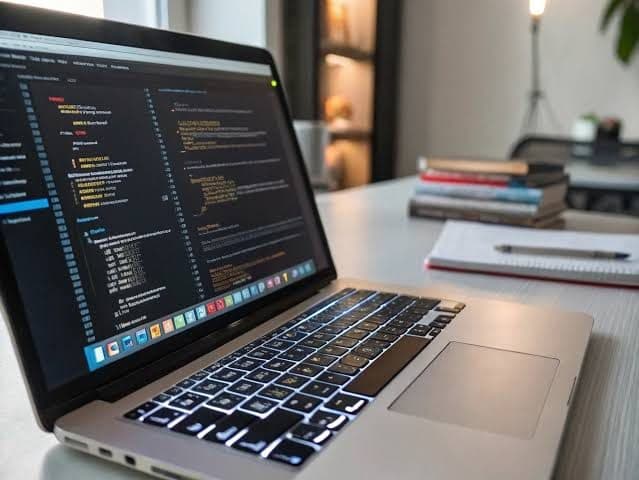
If you've ever wondered, “Can I actually run an AI model on my own laptop?”, the answer is yes.
You don't need a massive server or an expensive data center to start experimenting with AI. Today, many smaller, pre-trained models can run directly on a regular laptop. The experience depends mainly on your processor, RAM, GPU, and the size of the model you want to use.
For someone learning AI, running a model locally can actually be a great place to start.
What Do You Need?
You don't need a high-end machine for smaller models. A reasonably modern laptop with around 8GB or more of RAM, enough free storage, and a stable internet connection is a good starting point.
A dedicated GPU isn't essential for small models, although having one can make a noticeable difference in speed.
You'll also need some basic software. Python is commonly used for AI and machine learning projects, while tools such as Ollama, llama.cpp, PyTorch, and other local AI frameworks can help you run models on your computer.
The initial setup may take some time, especially if you're new to Python or command-line tools, but once everything is installed, running a model locally can be surprisingly straightforward.
Start With a Pre-Trained Model
You don't need to train an AI model from scratch.
Training a large model requires significant computing power, time, and data. Instead, beginners can start with a pre-trained model and use it for tasks such as image classification, text generation, summarization, or simple question answering.
For example, a lightweight image-classification model can analyze a photograph and predict what objects are present. The entire process can happen on your laptop without sending the image to a cloud service.
That's called inference—using an already-trained model to produce an output.
What About Performance?
This is where things get interesting.
Just because your laptop can run a model doesn't mean it will run every model smoothly.
Smaller, optimized or quantized models can work reasonably well on consumer hardware. Larger models can quickly become demanding because they need more RAM or GPU memory, commonly called VRAM.
CPU-based inference can also be slower than GPU-based inference.
This is why cloud platforms such as Google Colab remain useful, especially for students. Instead of buying expensive hardware, you can temporarily access more powerful computing resources when your project requires them.
Can You Train Your Own AI?
For small machine-learning projects, yes.
Training a large modern AI model from scratch, however, is a completely different challenge. It can require powerful GPUs, huge datasets, lots of memory, and potentially days or weeks of computing time.
For beginners, learning with pre-trained models is usually a much more practical approach.
Why Run AI Locally?
There are several good reasons to experiment locally.
Your data can stay on your machine. You don't have to pay for every API request. You can experiment without depending entirely on
Add your perspective
Sign in to comment, like, and build your reputation.